News | company news | Mar 20,2026
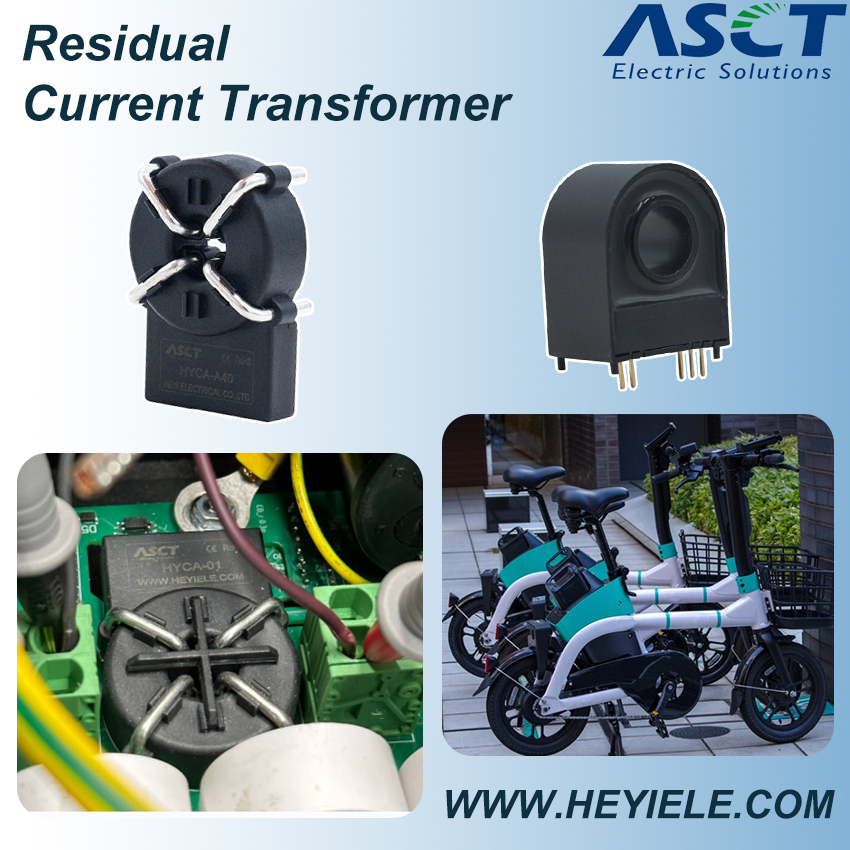
As EV charging infrastructure expands rapidly across Europe and the UK, engineers are facing a critical challenge with Residual Current Sensors:
Residual current sensors are no longer optional components—they are essential for system protection, certification, and user safety.
In this guide, we break down exactly how professional engineers evaluate and select the right residual current monitoring solution.
Residual current detection plays a vital role in preventing:
Electric shock hazards
Fire risks caused by insulation failure
System damage due to leakage faults
In EV charging systems and power converters, leakage current is unavoidable due to:
High-frequency switching
EMI filters
Capacitive coupling
If not properly detected, even small leakage currents can lead to serious safety incidents.
One of the most overlooked risks in modern systems is DC leakage current.
Traditional protection devices (Type A RCDs) can:
Detect AC leakage
BUT fail when exposed to DC components
The Risk:
DC leakage current above 6mA can:
Saturate the magnetic core of RCDs
Disable protection functionality
Leave users completely unprotected
This is why engineers increasingly search for:
AC DC leakage current sensor
6mA DC residual current detection module
✅ The Solution:
Use a combined AC/DC residual current monitoring unit capable of:
Detecting both AC and DC leakage
Triggering reliable trip signals
Maintaining protection integrity
For EV charging systems, compliance with IEC 62955 (RDC-PD) is mandatory.
Engineers must ensure their design includes:
✔ 1. 6mA DC Detection Capability
The system must detect DC leakage current at or above 6mA.
✔ 2. AC + DC Monitoring
Combined residual current detection is required—not just AC.
✔ 3. Reliable Trip Output
The system must trigger a disconnection when thresholds are exceeded.
✔ 4. Self-Test Functionality
To ensure long-term reliability and fault detection.
Practical Engineering Solution
A well-designed residual current monitoring unit (such as the HYCA-01) integrates:
AC/DC leakage detection (DC threshold ~4.5–6mA)
Dual trip outputs (30mA AC / 6mA DC)
PWM signal output for real-time monitoring
Built-in self-test function
IEC 62955 & IEC 62752 compliance support
This allows engineers to meet compliance without complex redesign.
When sourcing residual current sensors, engineers don’t just compare price—they evaluate performance across multiple dimensions:
Can it detect both AC and DC leakage?
Does it meet the 6mA DC requirement?
IEC 62955 (EV charging)
IEC 62752
Digital (trip signals)
PWM (for monitoring & MCU integration)
Analog (less common in modern systems)
PCB mounting vs external device
Size and ease of installation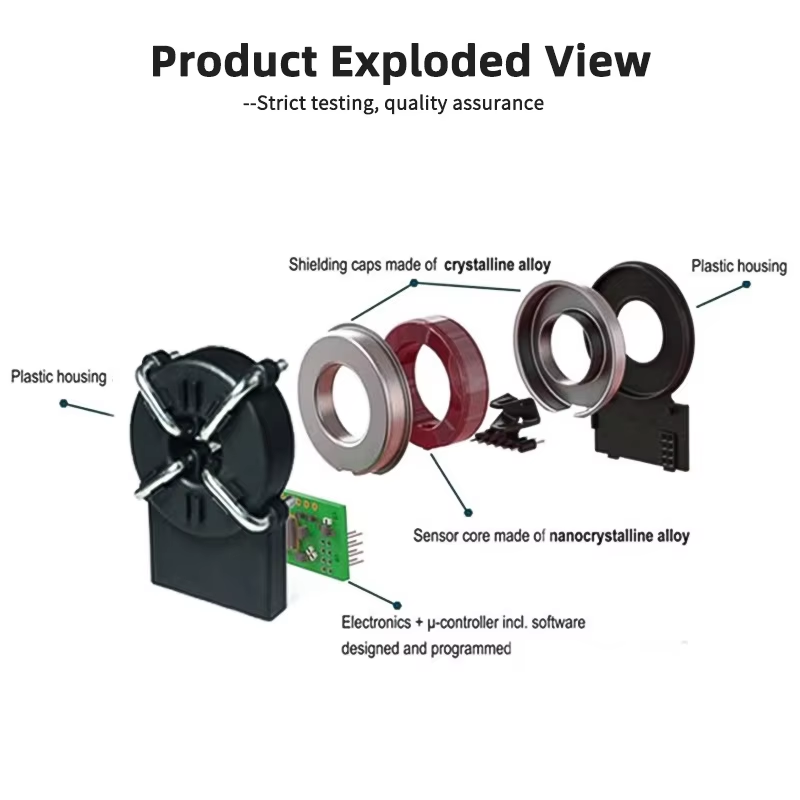
Compatibility with control systems
Self-test function
Fault output signal
Long-term stability
Low error (e.g., ±0.5mA level)
Stable performance under temperature variation
Compay:HEYI Electrical Co., Ltd.
Brand: HEYI/ASCT
Contact: Bethy
E-mail: heyi@heyiele.com
Tel: 86-13968747975
--- END ---

COPYRIGHT © HEYI ELECTRICS SOLUTION


