News | company news | Sep 23,2025
In electrical systems, leakage current sensors act like safety guards. They constantly monitor the circuits for abnormal leakage, over current, and other conditions.
If a problem arises, they immediately sound the alarm, nipping the danger in the bud. The problem is that many manufacturers’ leakage current sensors tend to malfunction after a period of use. Why is this?
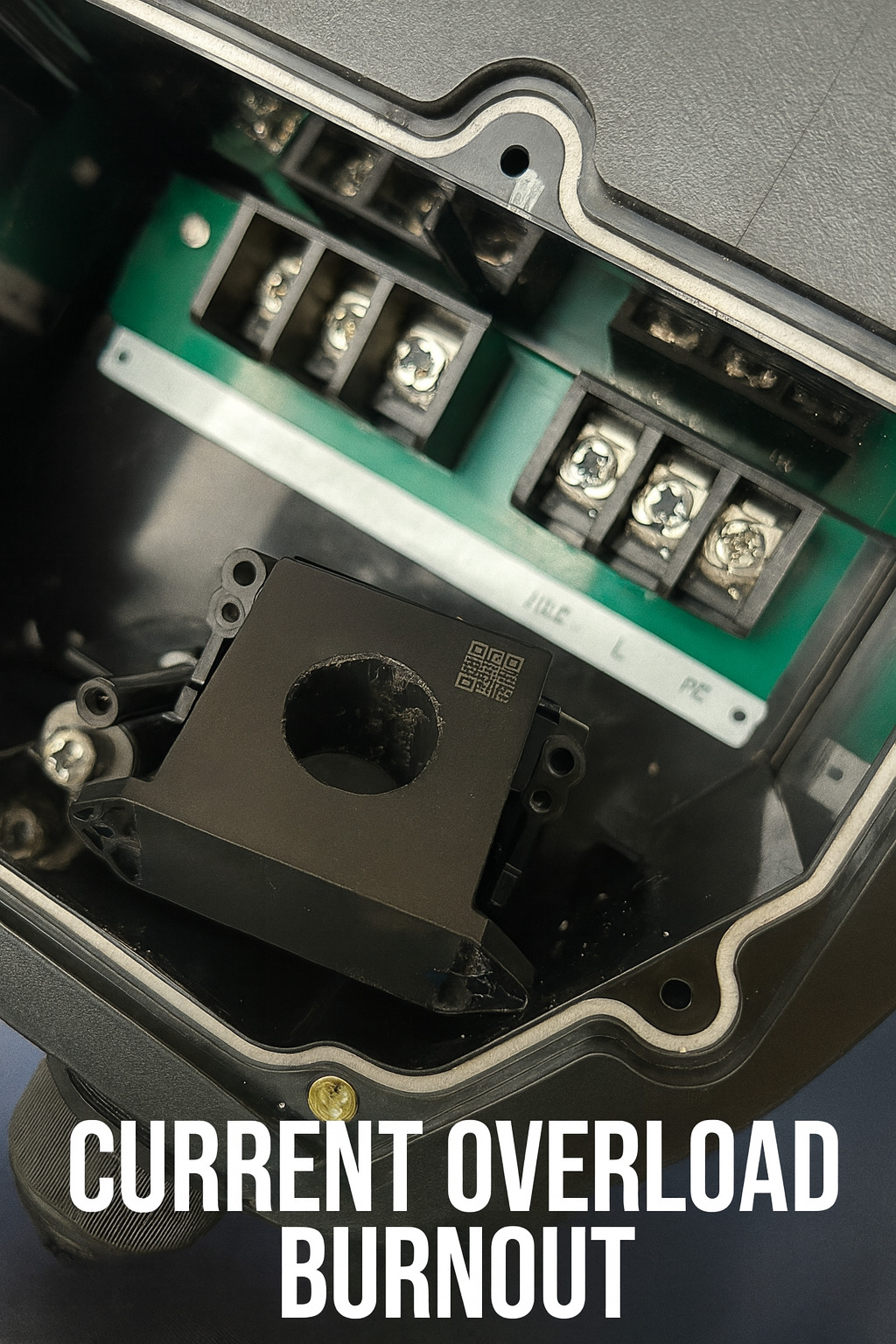
Leakage Current sensors, like humans, will inevitably suffer from prolonged overloads. For example, if a sensor is designed to handle 80A current and is constantly subjected to loads close to its upper limit, it will heat up and age faster.
High temperatures, high humidity, dust, and corrosive gases can all degrade sensor performance. Many sensors are used outdoors in charging stations and electric vehicle environments, where they are exposed to the elements, sun, and rain, putting a high test on their quality.
Long-lasting current sensors are prone to zero-point drift, leading to inaccurate detection. Typical examples include alarms that sound even when there’s no leakage, or failure to trigger even when there’s a real leakage. This is the biggest problem with many older sensors.
Lack of self-checking and protection mechanisms
Some manufacturers’ current sensors simply wait to fail and have no self-test function, which can easily lead to situations where you think you are safe, but in fact you have already failed.
HEYI HYCA-07-PD leakage current sensors module is specially used in high-demand scenarios such as charging piles and converter leakage detection, and its design concept is very targeted.
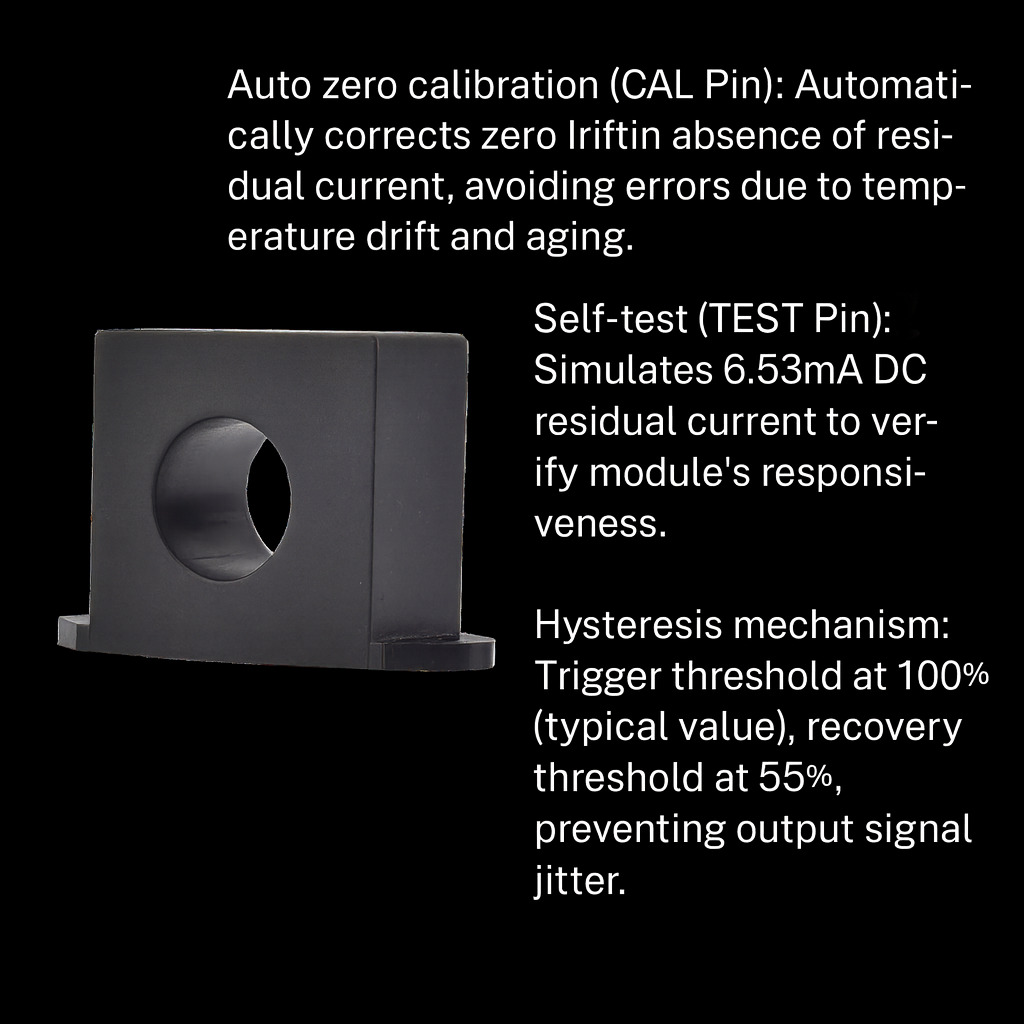
HYCA-07-PD leakage current sensors Design Advantages
Wide working environment
It can work normally in an environment of -40℃ to +85℃ and can withstand 95% humidity. In other words, whether you are in the freezing cold of the north or the humid environment of the south, it can hold its ground.
Accurate leakage detection
It can monitor both AC and DC leakage currents simultaneously, with a very low threshold for action (for example, a DC leakage current of just 3.5mA-7mA can trigger it).
This means it is more sensitive than traditional AC-only sensors and better meets the safety standards of electric vehicles and new energy scenarios.
Self-test and calibration functions
The module comes with a built-in “TEST input” and a “CAL input.” Before charging, you can use this self-test to verify that it’s functioning properly. Calibration can address zero-point drift and ensure long-term accuracy. This feature isn’t common in traditional sensors.
Low power consumption and long life
The power consumption is less than 110mW and the lifespan is designed to exceed 20 years, which means it will hardly add any additional burden to the system and can achieve long-term stable operation.
International standards support
It complies with the IEC 62752 and IEC 62955 standards, which are mandatory requirements for the safety of charging new energy vehicles. In other words, with this module, charging pile manufacturers don’t have to worry about failing safety tests.
To sum up
Current sensor damage is often caused by harsh environments, lack of protection and self-test mechanisms, or zero-point drift leading to reduced accuracy.
The HYCA-07-PD addresses these pain points with a number of practical designs: a wide temperature and humidity range, low action threshold, full AC/DC coverage, self-test calibration, low power consumption, and long life, all in strict compliance with international standards.
In layman’s terms, it is like a “smart and durable ” security captain who can not only do his job, but also conduct physical examinations on himself to ensure that he does not fail at critical moments.
Compay:HEYI Electrical Co., Ltd.
Brand: HEYI/ASCT
Contact: Bethy
E-mail: heyi@heyiele.com
Tel: 86-13968747975
--- END ---

COPYRIGHT © HEYI ELECTRICS SOLUTION


