News | company news | Sep 13,2024
Why do advanced EV charging systems need accurate current sensors?
As the use of electric vehicles continues to increase, people’s attention to the car battery system has shifted from the range to the charging time. Electric vehicle charging systems must operate safely and reliably, as improper execution can lead to inefficiencies and shortened operating life. The more the charging infrastructure expands into businesses, public Spaces and homes, the greater the need for the safety and reliability of EV charging systems. Home charging systems in particular, any aspect of failure can lead to a serious fire hazard. While improving the performance of electric vehicles, current sensing solutions also address issues of safety and reliability.
Range and velocity
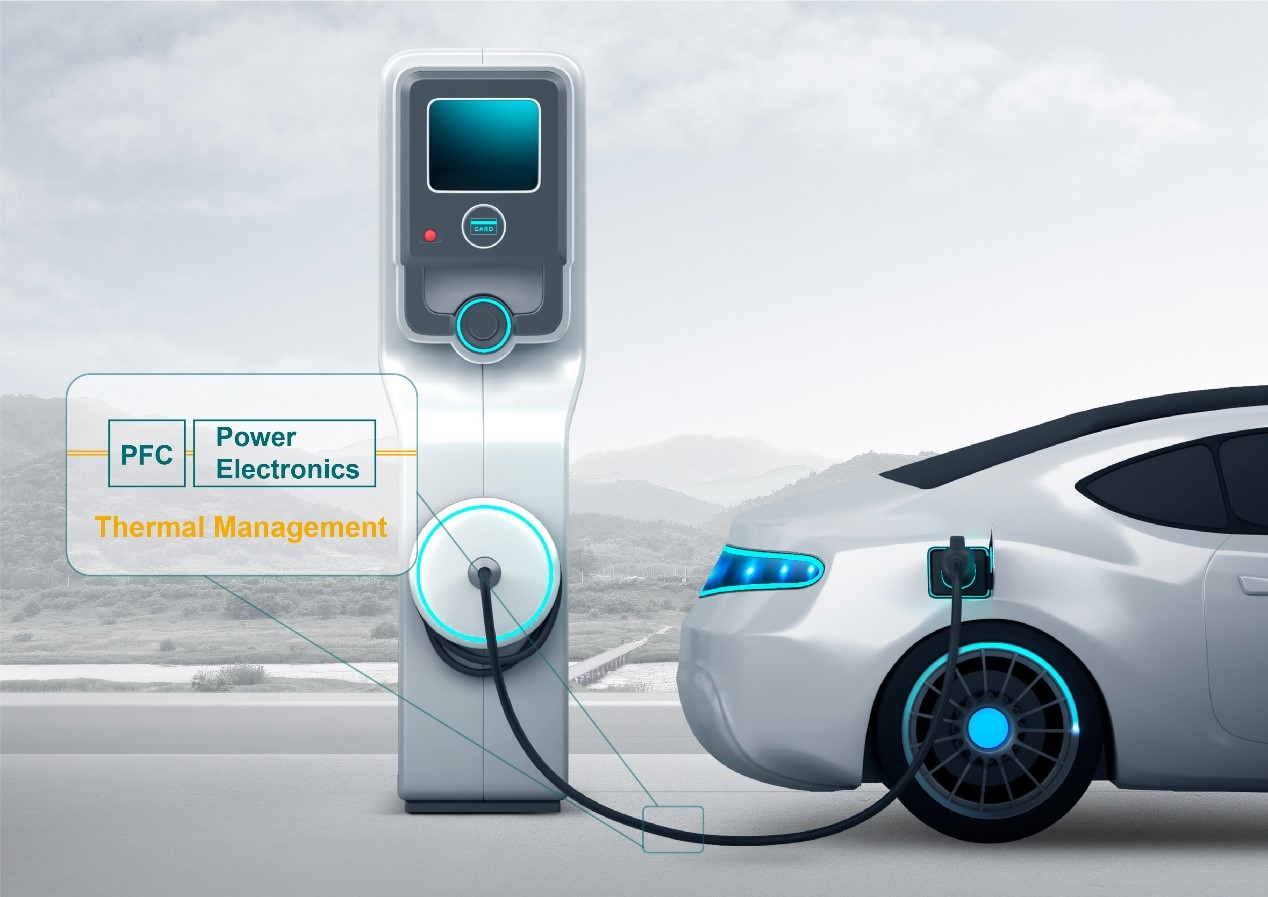
The latest power electronics and conversion solutions are eliminating concerns about range and battery life, which is increasing consumer acceptance of electric vehicles, and it is also important to cost-effectively improve the efficiency, safety and performance of power conversion systems. When it comes to EV charging performance, strict power factor correction (PFC), measured current and optimized conversion are ensured, while proper thermal management is ensured. In a power conversion system, each of these aspects influences each other.
When it comes to the performance and efficiency of EV charging solutions, current measurement helps manage thermal performance. It is important to note that improper thermal management can be disruptive and costly. The correct current sensing method can improve the performance, safety and cost effectiveness of power electronic equipment. Advanced current measurement solutions also provide users with early fault detection and real-time performance information. The ability to quickly and accurately detect vehicle overcurrent conditions or other performance losses enables the system to predict and resolve potential circuit problems in a timely manner.
When electric vehicle charging systems have extreme power levels and load conditions, it is important not only to prevent obvious hazards (such as ground faults and short circuits), but also to monitor system performance in real time. Advanced current sensors as part of the feedback control loop function play a vital role in the charging system, which can improve the performance, efficiency and hotness of electric vehicle charging systems.
Type of current sensor
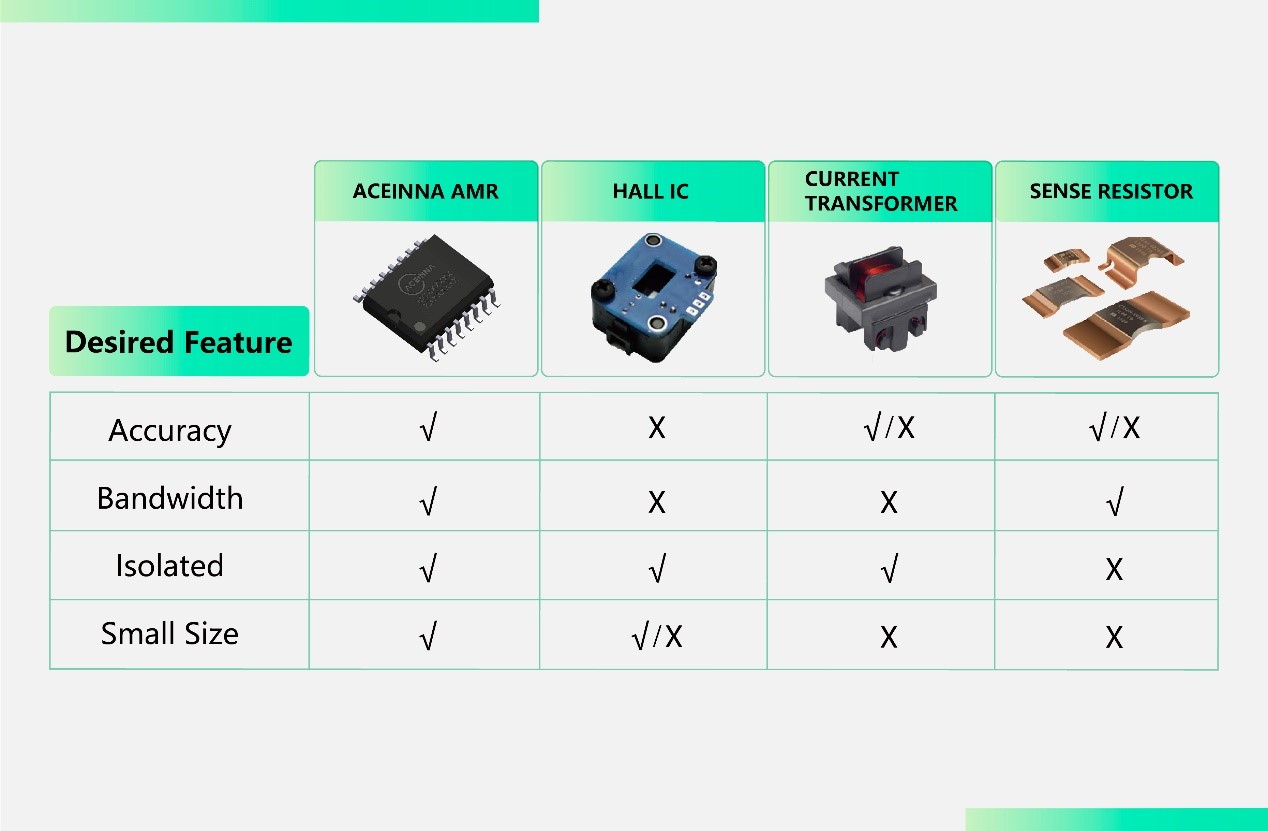
A simple shunt based current sensing solution determines the current flowing through a circuit by measuring the voltage drop. Resistive detectors can provide good dynamic performance and linearity, but have limitations in detecting both large and small currents. Active compensation can help solve this problem, but when there is a high current in the EV charging system, the resistor power consumption of the shunt itself can become a thermal problem. Such sensors are contact-based, increasing the complexity of the system and the possibility of failure.
Hall sensors are a more complex solution than streaming solutions, it is isolated, and it lacks accuracy and bandwidth compared to other solutions. Depending on the topology and performance required by the circuit, it can be deployed in a compact configuration. Solutions using current transformers are isolated and can be more accurate depending on the circuit topology. Its size and weight are an issue, and this solution is not well suited for cost-effective compact car charging systems.
Advanced embedded solutions based on AMR current sensors provide current isolation, no power consumption, fast and accurate reading of data, while correcting the offset via an active feedback loop to adjust the gain parameters and actively compensate the sensor offset. Integrated current sensing solutions in advanced power systems offer space savings and performance advantages over other solutions. The size of non-integrated solutions using operational amplifiers and comparators will be larger than single-package solutions, which are tens of millimeters in size.
In the field of advanced overcurrent and undercurrent protection, the speed and power levels required for EV battery charging systems require optimal solutions. With the faster switching speeds and higher power levels of EV charging systems, traditional fuses and circuit breakers often cannot meet the demand, requiring real-time monitoring of every critical aspect.
Electric vehicle manufacturers are also meeting these advanced charging needs by increasing the operating voltage (currently up to 800V). These high-voltage systems deliver the same amount of power with less current, which can reduce the total weight of the vehicle because they carry lighter charging cables. Electric vehicles with 800V charging architectures and charging stations capable of handling high power levels can significantly reduce charging times.
In order to provide cost-effective solutions, home-based charging systems are typically deployed at the highest possible power density. This means that the latest EV chargers must have advanced current measurement capabilities for early fault detection and performance information in real time. Advanced charging systems must always be alert to out-of-range current conditions and other performance challenges, alerting the system to potential thermal and performance issues. Other parts of the system are equally important in electric vehicles (and many industrial motor drive applications), such as traction inverters and other drive systems. The use of advanced current sensing as a method of obtaining additional vehicle performance information (real-time battery discharge rate) is another advantage of battery management systems, further improving the safety and reliability of electric vehicles.
Avoid risks and improve performance
Many next-generation chargers are on the edge of their performance range, especially in compact home systems. To anticipate and address potentially dangerous issues, hard-driven EV battery charging systems must be able to immediately detect out-of-range current conditions or other performance losses. Hazard issues include typical ground failures and short circuits, as well as the danger of operating under extreme power and load conditions that the system cannot support. Advanced current monitoring in the charging system also performs the initial part of the feedback control loop function, regulating the performance, efficiency and hotness of the power circuits in the inverter.
Current measurement is a key aspect of overcurrent and undercurrent protection. At the speed and power levels of EV charging systems, conventional fuses and circuit breakers are not up to the job unless used to prevent catastrophic failures in extreme cases. Advanced current sensing enables intelligent fault management to better address potential performance issues such as user error and minor damage to cables and connectors.
The Smart Power approach uses advanced current sensors to protect the circuit and the batteries involved from abuse while optimizing performance, reliability and safety. For high-power, high-density batteries with lithium iron phosphate (LFP) or lithium titanate (LTO), it is important to determine the state of charge (SoC), health state (SoH), and functional state (SoF) of the battery when charging. Only by closely monitoring these aspects can the full functionality of the battery be ensured.
Senna Sensors Advanced sensing solutions protect against overcurrent conditions and improve safety due to fast response and large current measurement range. These isolation devices can operate at both the high and low ends of the circuit, and their integrated nature reduces design complexity compared to shunt and amplifier solutions. For example, on the high voltage side of the power supply circuit, the new sensing current sensor can detect ground faults of the phase current (possibly due to wiring errors, aging, etc.), thus protecting the entire circuit.
When it comes to system safety, power and heat are inextricably linked. Power electronics must address any external heat that the system encounters that increases the thermal load, which means that any power electronics design must also be optimized for the thermal conditions generated internally or externally. The heat generated by the power management circuit, if not handled properly, can affect the performance of nearby electronics, especially sensitive analog components such as sensors, forcing these products to operate at higher operating temperatures than they are normally exposed to. Advanced current sensing methods can help monitor these thermal problems in the circuit.
Advanced current sensing methods improve system performance by reducing the instability of EV charging, the risk of system failure, and other circuit problems. Using anisotropic magnetoresistive (AMR) technology, the current sensors of New Sensing are accurate and non-contact, reducing design complexity in addition to optimizing performance compared to solutions using shunt and isolation amplifiers.
The power factor of a circuit is an important part of the power quality equation and is crucial for the effective operation of advanced electric vehicle chargers. Power factor correction (PFC) in the circuit improves the power factor ratio and power quality, increasing the energy efficiency of the device, while also reducing grid stress and electricity costs. By applying ideal compensation in real time at the point of load to improve the power factor, advanced current sensing on the low voltage side can be utilized to increase the available power.
Look to the future
The EV charging ecosystem is still developing, and we are still a long way from the final configuration we want to achieve. With next-generation circuit management solutions powered by Sensor-current sensing solutions, you can drive safely in a cost-effective manner while maintaining vehicle performance. Efficiency, reliability and performance are intertwined, and the right current sensing solution will serve every aspect of an EV charging system.
--- END ---

COPYRIGHT © HEYI ELECTRICS SOLUTION


