News | | Dec 23,2025
Switch position indicators are parts of systems. In my work I have seen switch position indicators, in power plants, substations and industrial control cabinets. Switch position indicators show the status of a switch from a distance.
There are two kinds of switch position indicators: switch position indicators and electronic (LED) switch position indicators. Each kind of switch position indicator has its advantages and disadvantages. This article compares the two kinds of switch position indicators by looking at details, performance and common uses.
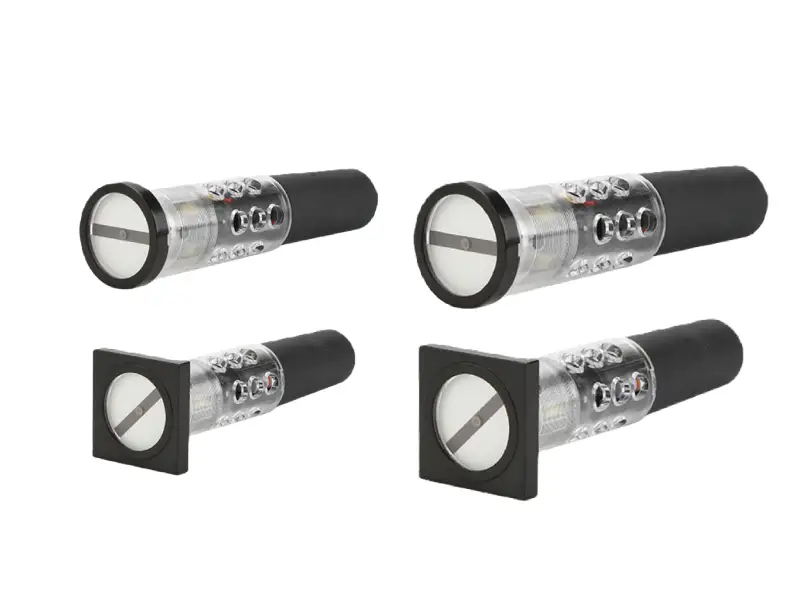
I notice that mechanical indicators use force to move parts. The electromagnetic force pushes the parts through coils, resistors and rotatable magnetic parts. The movement shows the switch position.
High durability: No electronic components are susceptible to voltage spikes.
Clear visual feedback: Physical motion is easily visible even from a distance.
The wide voltage range typically supports 24 V to 240 V AC voltage. The wide voltage range also supports 24 V to 240 V DC voltage.
Rugged construction: IP52 protection rating, UL94 V0 flame retardant rating, suitable for harsh environments.
Technical Highlights of HEYI Products
Rated voltage: 24V–240V
Angle indication error: ±2°
Withstand voltage: 2000V AC, 1 minute
Operating temperature: –25°C to 55°C
Panel opening size: Φ22.2mm
Electronic (LED) switch position indicator
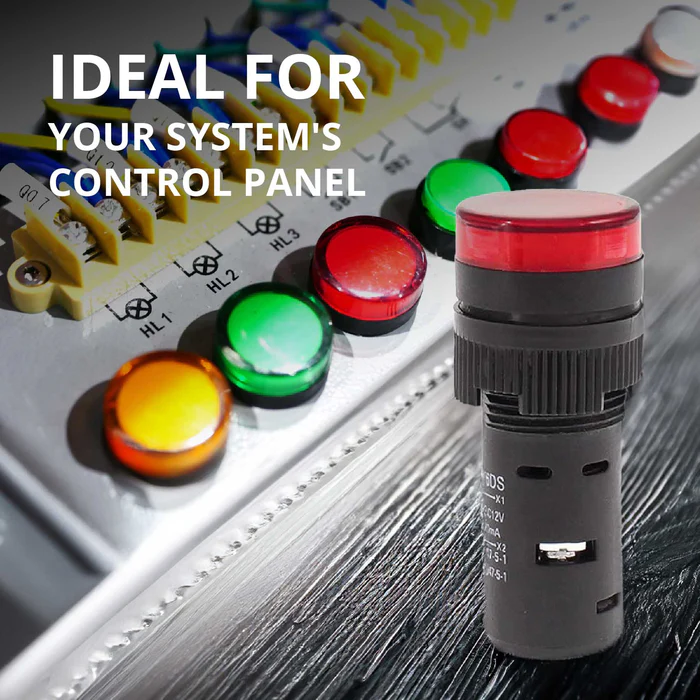
I have used indicators that have LEDs or digital tubes, internal circuitry and resistors. The electronic indicator shows the switch status by giving off light. The electronic indicator gives a energy signal. The electronic indicator can connect to a digital control system.
Low power consumption: typically ≤1.2VA, or even lower.
I notice that the LEDs give an indication. The LEDs provide lighting that’s easy to see.
The compact and flexible design can be made in shapes and many colors.
Suitable for low-voltage applications: typically optimized for 24V systems.
Technical Highlights of HEYI Products
Rated voltage: 24V or 240V optional
Power consumption as low as 0.5VA
Also features high voltage resistance: 2000V AC, 1 minute.
Protection rating IP52, flame retardant rating UL94 Vb
Operating temperature: -25°C to 55°C
Comparison Table: Mechanical vs. Electronic
| Feature | Mechanical Indicator | Electronic (LED) Indicator |
|---|---|---|
| Power consumption | ≤ 1.0 VA | ≤ 1.2 VA (usually lower in practice) |
| Indication method | Physical movement of mechanical components | LED illumination |
| Voltage range | 24V–240V AC/DC | Typically 24V or 240V AC/DC |
| Durability | No aging issues; long-term stable indication | LEDs may weaken over long-term operation |
| Response time | Slightly slower due to mechanical motion | Instantaneous response |
| Environmental adaptability | Better for high vibration and strong EMI environments | Suitable for stable, low-noise environments |
| Installation flexibility | Fixed mechanical structure | More flexible designs and color options |
| Maintenance requirements | Low maintenance, long service interval | LEDs may require replacement over time |
| Cost | Higher initial cost | More cost-effective initially |
How to choose
Choose mechanical if:
Your environment has interference. The environment also has vibration.
You need a solution that lasts a time and is reliable. The solution must be almost maintenance free.
Your system supports a voltage range of 24V–240V. The system can run on high voltage.
You like the physical motion indicators. Physical motion indicators are the ones you prefer.
Choose electronic if:
I think about the power consumption when I design a system. I also think about the signals.
I see that your application environment is stable. I see that your application environment has interference.
You need the indicators. You also need the indicators. You might want the indicators well.
Your system is primarily low voltage (e.g., 24V DC).
Mechanical switch position indicators and electronic switch position indicators each have advantages, in systems. I have seen mechanical indicators survive conditions better. Electronic indicators give efficiency and flexibility in controlled environments. Knowing the operating environment the voltage requirements and the maintenance preferences helps you pick the indicator.
For detailed specifications and product models, please refer to HEYI’s HP series (mechanical) and HY series (electronic) indicator product information.
Compay:HEYI Electrical Co., Ltd.
Brand: HEYI/ASCT
Contact: Bethy
E-mail: heyi@heyiele.com
Tel: 86-13968747975
--- END ---

Feb 04, 2026
Why is single‑phase window type current transformer so popular in the South American electricity market? —Technical Analysis Based on the South American Power Bureau’s Bidding and Outdoor Environment In countries, like Brazil, Chile, Peru and Colombia the power infrastructure construction has kept growing in recent years. The distribution network upgrades, the energy grid integration and the… Continue reading Why single‑phase window type current transformer Dominate South America’s Power Grid

Feb 03, 2026
Why have single phase satuation current transformers (CTs) become an essential core component of switchgear in Southeast Asia? — Detailed technical analysis using the ICT series encapsulated transformer as an example. We examine the ICT series encapsulated transformer. In Asian countries such, as Malaysia, Indonesia, Thailand and Vietnam the low-voltage switchgear appears a lot in… Continue reading Why Single-Phase Saturation Isolation Current Transformers Are Essential in Switchgear

Jan 22, 2026
People use Current transmitter. Why do people use transmitters, in the chillers the air compressors, the generators and the IoT systems? In systems I see chillers, in commercial buildings air compressors in factories and generators, in data centers. The chillers, the air compressors and the generators all have one thing in common. In short devices… Continue reading Why Current Transmitter Matter in Chiller, Air Compressor, and Generator

COPYRIGHT © HEYI ELECTRICS SOLUTION

