News | company news | Mar 14,2026
In modern power systems, split core current transformers have become a go-to solution for engineers who need accurate current measurement without interrupting existing circuits. Whether used for energy monitoring, industrial automation, or protection systems, selecting the right CT requires careful evaluation of electrical performance, mechanical design, and system compatibility.
In this guide, we’ll walk through how engineers actually choose a split core CT, using practical selection criteria and technical questions that professionals typically evaluate before installation.
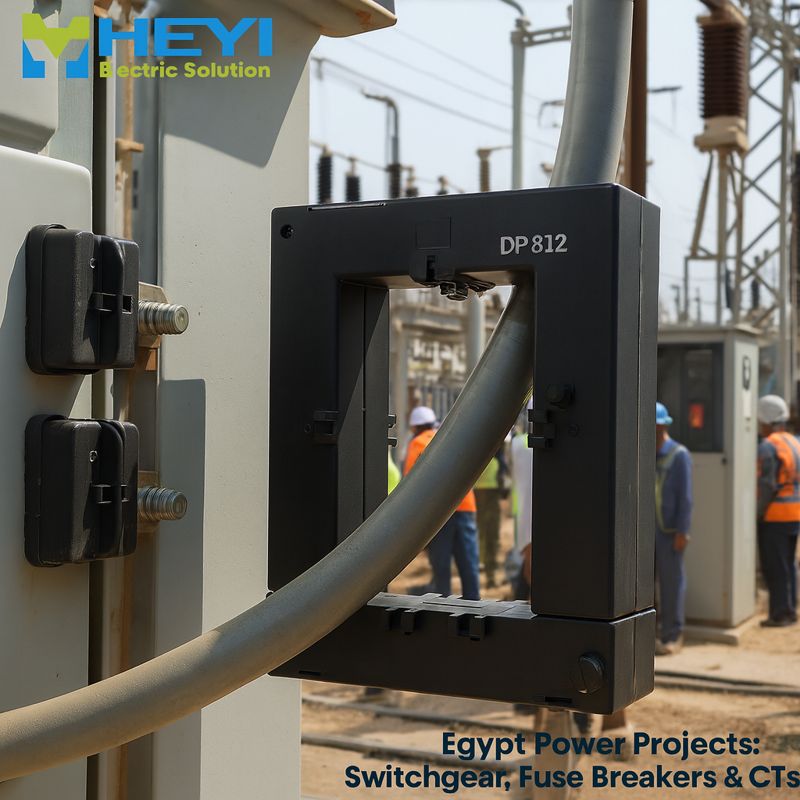
A special kind of current transformer, called a split core current transformer, is made so that its magnetic core can be opened and then closed around a conductor that’s already in place.
This is really useful because it means you don’t have to disconnect any cables to install it, which is a big deal in factories and power systems where stopping everything to do maintenance can be very expensive.
For example, in many industrial monitoring solutions, engineers prefer CT models with:
Wide inner window for large cables or busbars
Primary current ranges from 5A to 6000A
Portable and easy installation design
Multiple mounting options such as base mounting or busbar mounting
These features are what make split core current transformers perfect for measuring and monitoring current, as well as managing power systems. They are really useful in these kinds of applications.
Key Factors Engineers Evaluate When Selecting a Split Core CT
The dynamic current rating (Idyn) indicates the maximum instantaneous current that the CT can withstand during short-circuit conditions.
Engineers evaluate Idyn because:
A CT with a higher Idyn rating provides better mechanical and thermal resilience, especially in high-fault-current environments like substations and industrial plants.
The knee point voltage is a critical parameter for CTs used in protection applications.
It represents the voltage at which:
Protection engineers check this value carefully because core saturation can distort current signals, which may cause protection relays to misoperate.
A CT with a higher knee point voltage is usually better suited for relay protection systems, especially during fault conditions.
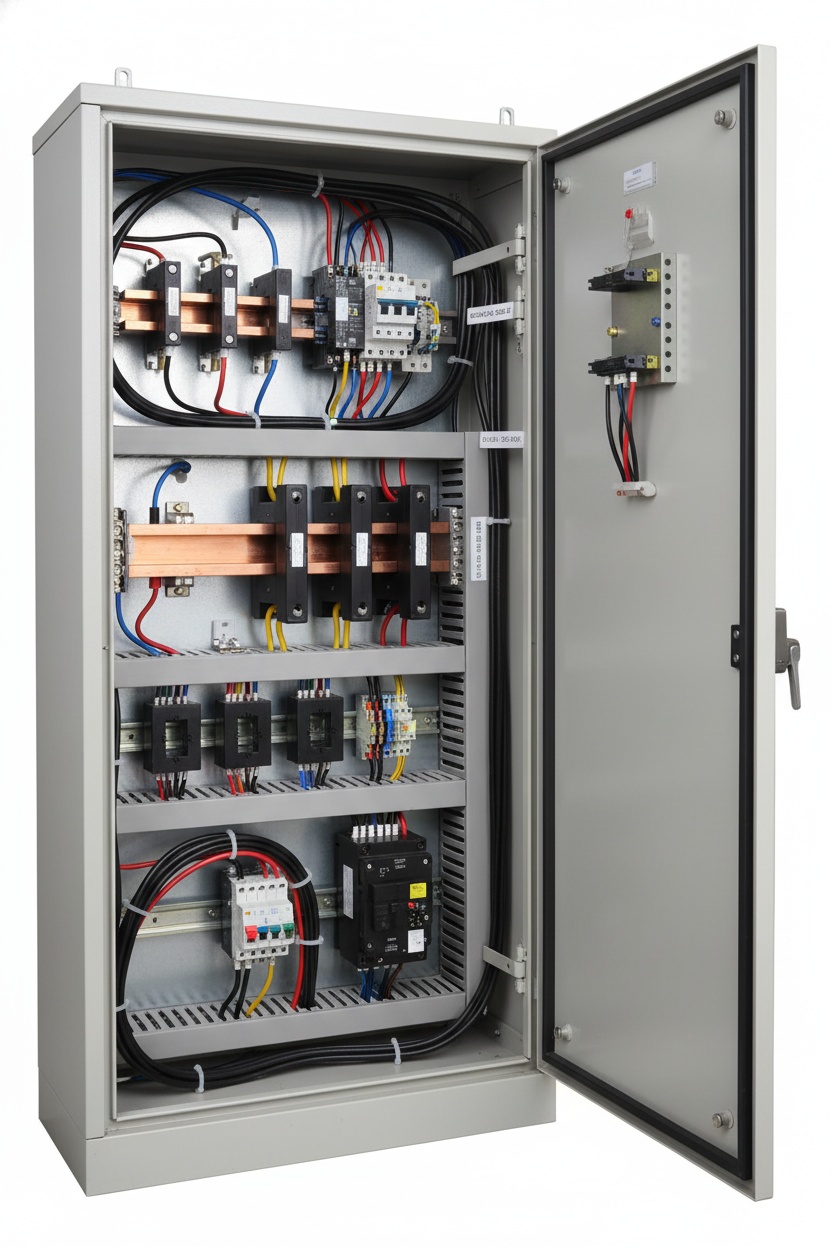
Not all CTs are designed for protection systems.
When engineers evaluate a CT for protection relays, they consider:
When a current transformer is used just for keeping an eye on things or measuring, the rules might not be as tough. But for protective relays, the current transformer has to stay accurate even when there are really high fault currents happening.
Engineers often prefer high-quality magnetic core materials to ensure stable measurement performance across varying load conditions.
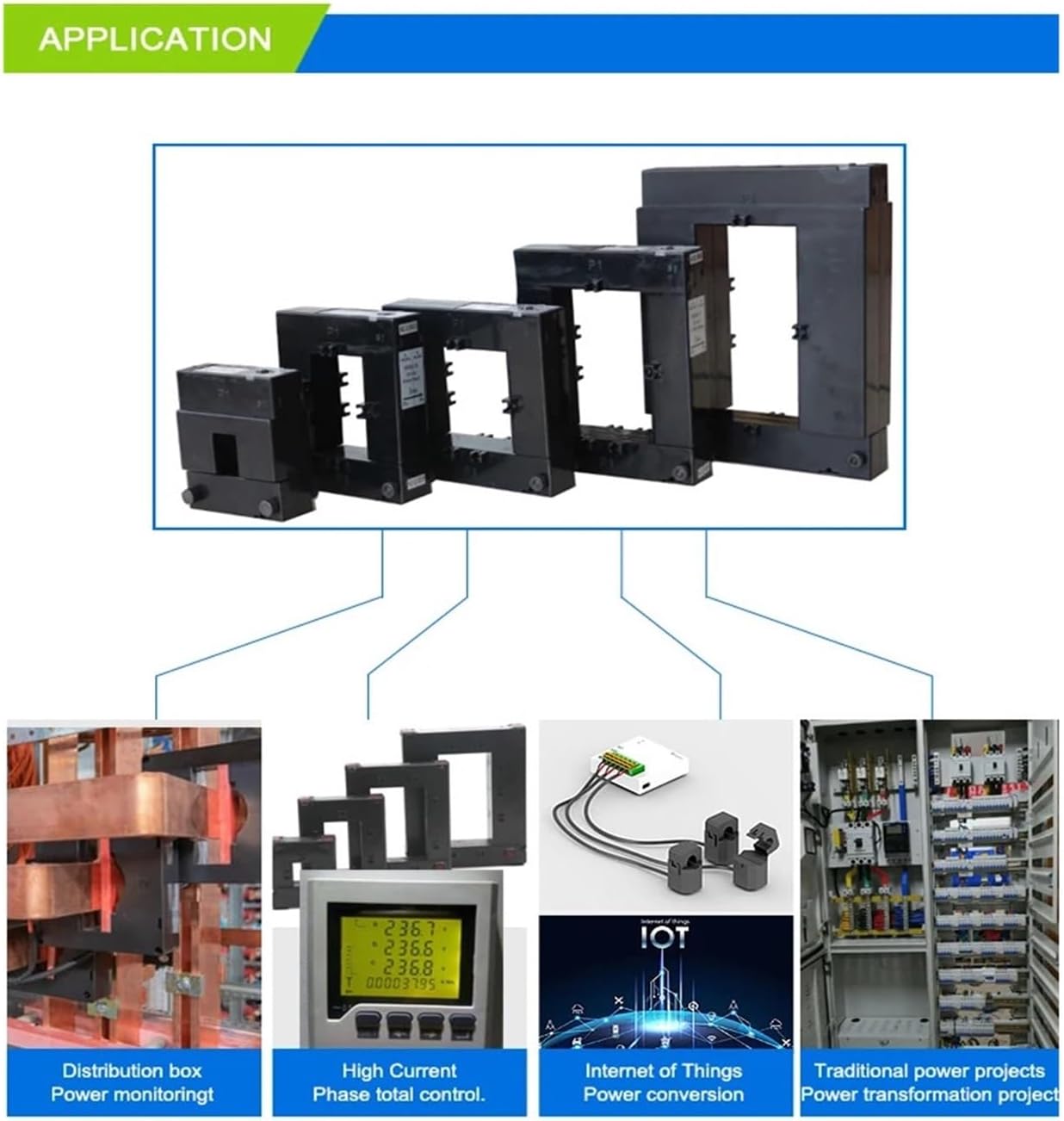
Stability in mechanics is just as crucial as how well something works electrically.
Many modern split core CTs use double-screw fastening mechanisms or similar locking designs to ensure:
Engineers typically prefer dual locking systems because they prevent the core from opening due to vibration or installation errors.
7.Can the Current Transformer work together with Supervisory Control and Data Acquisition monitoring systems?
Industrial facilities increasingly rely on SCADA systems for centralized monitoring.
When selecting a CT, engineers check whether it can integrate with:
Power monitoring devices
Data acquisition modules
SCADA platforms
Remote energy management systems
If the CT output is compatible with monitoring equipment, it becomes easy to collect real-time current data for predictive maintenance and energy optimization.
When it comes to energy meters, engineers need to know if the CT is compatible and works smoothly with them.
Compatibility ensures that the CT can provide accurate current signals for:
Split core CTs designed for metering typically offer:
They are perfect for big buildings, like offices and factories, and also for smart systems that manage energy.
Mechanical Design Considerations
Beyond electrical specifications, engineers also evaluate installation flexibility.
Key mechanical design features include:
Wide Inner Window
A large opening allows the CT to clamp around large cables or busbars, making it suitable for various installations.
Some CTs offer two built-in fixing methods:
This flexibility is really useful for engineers because it lets them put the CT in small spaces like electrical panels or distribution cabinets.
Because split core CTs do not require cable disconnection, they enable:
Faster installation
Reduced downtime
Lower maintenance costs
Engineers commonly use split core current transformers for:
Their ability to measure current without shutting down equipment makes them essential in modern electrical infrastructure.
Final Thoughts
Selecting the right split core current transformer requires balancing electrical performance, mechanical design, and system compatibility.
Experienced engineers typically evaluate:
By carefully analyzing these factors, engineers can ensure accurate current measurement, safe operation, and reliable system monitoring in a wide range of power applications.
Pro Tip for Engineers:
When choosing a split core current transformers, think about what you might need in the future, not just what you need now. If you pick a CT that works with energy meters and SCADA systems, it will help you manage power better tomorrow.
Compay:HEYI Electrical Co., Ltd.
Brand: HEYI/ASCT
Contact: Bethy
E-mail: heyi@heyiele.com
Tel: 86-13968747975
--- END ---
Prev: Can Three-Phase CTs Be Directly Matched with MCCBs?
Already the latest article

COPYRIGHT © HEYI ELECTRICS SOLUTION


