News | company news | Mar 26,2026
In North America, engineers working on energy monitoring, submetering, and building automation systems often face a critical question:
Are split core current transformers accurate enough for energy metering?
This question is especially important in retrofit projects, where shutting down power is not an option. While split core CTs offer unmatched installation convenience, concerns about accuracy, air gaps, and compliance remain.
In this guide, we break down the real engineering answer—and when split core CTs are the right choice for metering applications.
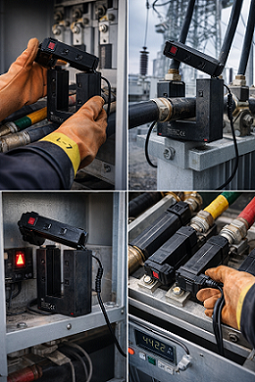
In applications such as:
CT accuracy directly affects:
The short answer is:
Yes—but not always in a way that matters.
Why accuracy can be affected:
Split core CTs have a mechanical opening, which introduces:
A small air gap in the magnetic core
Slightly lower magnetic coupling efficiency
Potential phase shift or ratio error
Compared to solid core CTs, this can result in:
Lower accuracy class (typically 1.0 or 0.5)
Sensitivity to improper installation (e.g., misalignment)
In most North American energy monitoring projects, split core CTs are widely used because:
For:
Building energy management systems (BEMS)
HVAC optimization
Load analysis
Accuracy class 0.5–1.0 is usually sufficient

High-quality split core CTs (like DP series designs) are engineered to minimize traditional drawbacks:
Precision-machined core mating surfaces
Optimized magnetic materials
Stable output signals (1A / 5A / 0.333V)
Result: Accuracy close to solid core CTs in real-world use
In practice, engineers often find:
A well-installed split core CT performs better than a poorly installed solid core CT.
Key factors:
There are still cases where solid core CTs are preferred:
Revenue-grade billing (utility-level)
Requires ANSI / revenue-grade certification
Accuracy class 0.3 or better
Protection systems
Requires high saturation performance
Fault current precision
Despite accuracy concerns, split core CTs dominate retrofit projects because of one major advantage:
Installation Without Power Shutdown
In real-world U.S. projects:
Shutting down a panel = expensive + risky
Downtime can impact operations (especially in data centers or hospitals)
Split core CTs allow:
Fast installation on live conductors
No need to disconnect cables
Minimal labor cost
This is often more valuable than marginal accuracy differences.
If you’re using split core CTs for energy metering, follow these engineering best practices:
1.Choose the Right Accuracy Class
0.5 class → recommended for most monitoring
1.0 class → acceptable for general use
2.Match CT Ratio Properly
Avoid oversized CTs:
400A system → use 400A or 600A CT (not 1000A)
Improves low-current accuracy
3.Ensure Proper Core Closure
No visible gap
Clean contact surfaces
4.Use Correct Output Type
0.333V → ideal for energy meters (safe, low voltage)
1A / 5A → traditional systems
5.Consider Burden and Cable Length
Long cable runs can affect accuracy
Use appropriate burden-rated CT
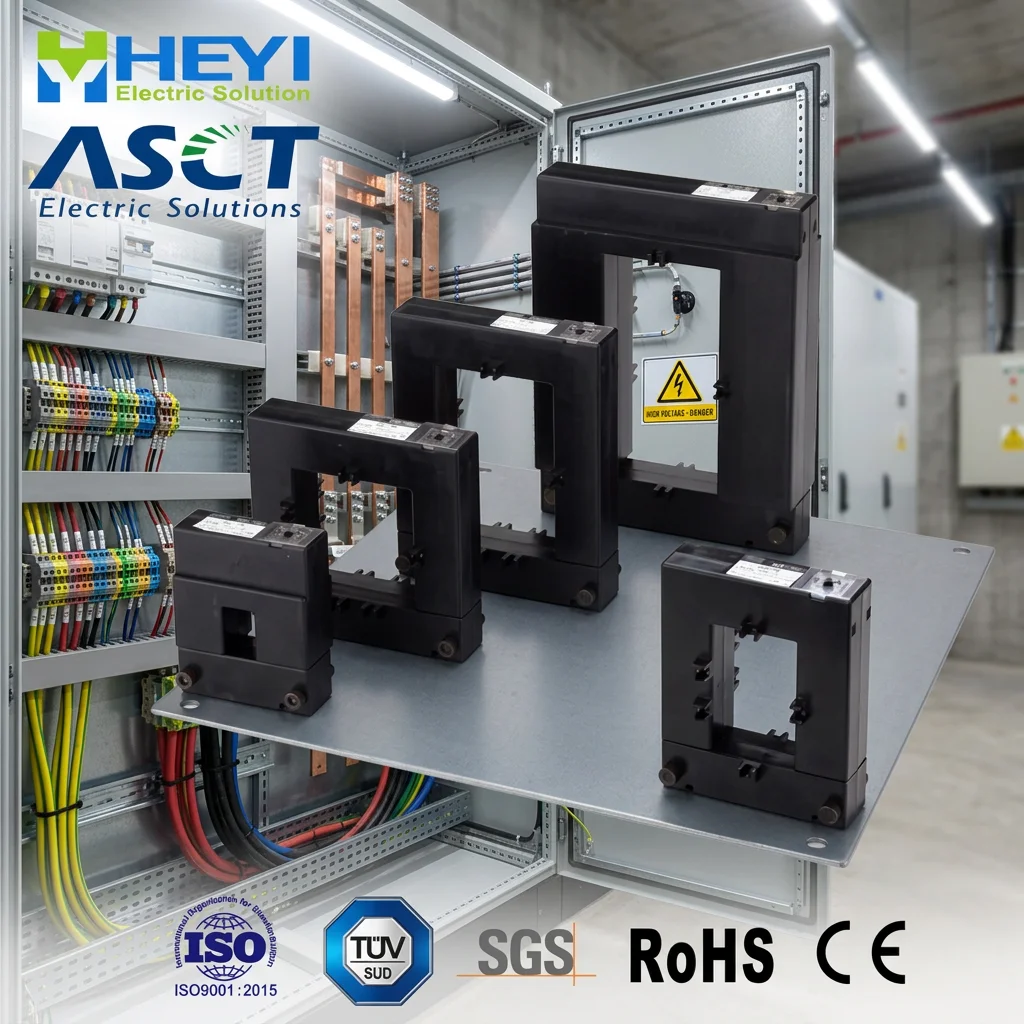
Recommended Solution: DP Series Split Core Current Transformers
For engineers working on energy monitoring and retrofit projects, DP series split core CTs are designed to balance:
Accuracy
Engineered for stable measurement performance
Suitable for submetering and energy monitoring
Easy Installation
Clamp-on design for live systems
Ideal for retrofit and upgrade projects
Flexible Output Options
Compatible with modern energy meters and BMS systems
North American Applications
Commercial buildings
Industrial panels
EV charging systems
Data centers
Real-World Application Example
In a typical U.S. commercial retrofit project:
Existing panel cannot be shut down
Engineer installs split core CTs for submetering
Accuracy class 0.5 meets monitoring requirements
Installation completed in hours instead of days
Result:
Lower installation cost + reliable energy data
Final Verdict: Are Split Core CTs Accurate Enough?
Yes—if used in the right application.
Use split core CTs when:
✔ Energy monitoring
✔ Submetering
✔ Retrofit projects
✔ Non-revenue applications
Avoid them when:
✖ Utility billing
✖ Protection systems
Compay:HEYI Electrical Co., Ltd.
Brand: HEYI/ASCT
Contact: Bethy
E-mail: heyi@heyiele.com
Tel: 86-13968747975
--- END ---
Prev: Why are LMZ metering current transformer the ideal choice for the MEA and PEA?
Already the latest article

COPYRIGHT © HEYI ELECTRICS SOLUTION


