News | company news | Oct 19,2024
Application of open-type current transformer in low voltage power distribution system
At present, most low-voltage current transformers in the market are mainly used in the construction of new projects. Due to the rapid development of the economy, enterprises are gradually becoming more aware of energy conservation and emission reduction. The electrical characteristics of many enterprises are:
①The electrical cabinet runs for a long time;
② Most current transformers only measure the system current, and there are no corresponding metering devices and protection devices. The only metering device is a total meter of the power supply bureau, and the power of all workshops cannot be assessed. There is no system line protection device at all;
③ In situations where the harmonic content is relatively large, provide acquisition signals to the APF active filter;
④ Most of the line trunks are large-sized copper bars, which require a lot of manpower and time to dismantle, and it is inconvenient to install conventional current transformers;
⑤The company’s production time is relatively tight and the power outage cannot be prolonged.
Therefore, if the above electrical modifications are required, the use of open-type current transformers can save users a lot of investment.
1 Structural features
This product has a novel structure, beautiful appearance, and a transparent flip cover design for easy wiring. The shell material is PC/ABS alloy, which has the characteristics of high temperature resistance, high mechanical strength, and environmental protection; the iron core is made of oriented cold-rolled silicon steel sheet, which has the characteristics of stable performance, high mechanical strength, and extremely high magnetic permeability; the enameled wire in the skeleton coil is made of high-strength enameled wire, which has the characteristics of high insulation strength and strong temperature resistance. The specific structure is shown in Figure 1.
The open-type current transformer is developed on the basis of the traditional low-voltage busbar current transformer. It is compatible with cable and copper busbar installation methods. According to the measurement range of the primary current, 100A-5000A adopts a split design. The main specifications are K-30×20, K-08×50, K-80×80, K-120×60, K-120×80, K-160×80, and K-200×80.

Figure 1
2 Working principle of open-type current transformer
The working principle of the open-type low-voltage current transformer is shown in Figure 1. The primary winding of the open-type current transformer is connected in series in the measured line. I1 is the line current, that is, the primary current of the current transformer, N1 is the primary turns of the current transformer, I2 is the secondary current of the current transformer (usually 5A, 1A), N2 is the secondary turns of the current transformer, and Z2e is the impedance of the secondary circuit equipment and connecting wires.
When the primary current flows in from the P1 terminal of the current transformer and out from the P2 terminal, when the secondary Z2e is connected, the current I2 flows from S1 through the secondary winding of the current transformer, through Z2e to S2, forming a closed loop due to the principle of electromagnetic induction. It can be obtained that the current is I1×N1=I2×N2 in an ideal state, so I1/I2=N1/N2=K, where K is the transformation ratio of the current transformer.
However, after the core of the open-type current transformer is cut, the performance of the core will be greatly reduced, so the cross-sectional area of the core of the transformer must be increased, and the ampere-turns must be increased so that I1×N1=I2×N2≥100AN.
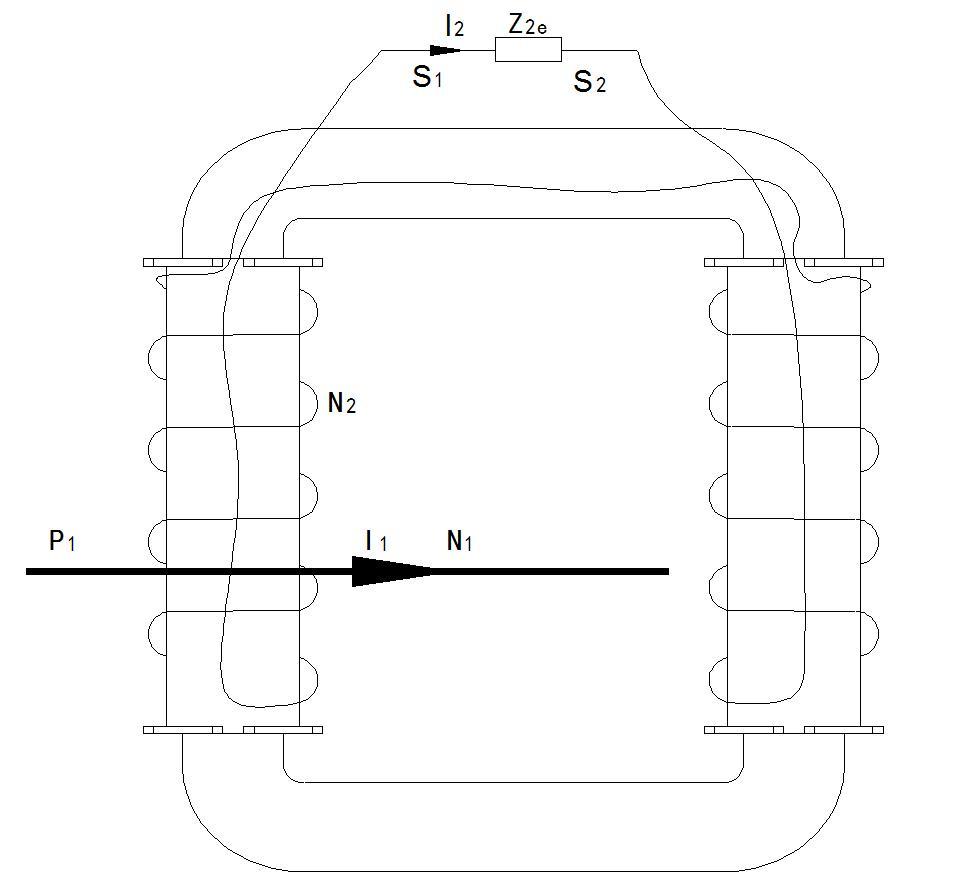
Figure 2

Figure 3
3 Product Installation
As shown in Figure 3, open the installation screws and nuts of the transformer, remove the lower body of the transformer, install the upper body of the transformer into the primary busbar of the power distribution system, close the lower body of the transformer, pass the installation screws of the transformer through the fixing holes of the upper and lower bodies of the transformer, tighten the nuts, fix the upper and lower bodies of the transformer together, and then fix the transformer to the busbar through the installation fixing holes on both sides of the transformer to complete the installation of the transformer. Then connect the secondary of the transformer to the measuring device. The whole process is relatively fast and simple.
Open-end current transformers are mainly used in low-voltage power distribution reconstruction projects. Like conventional closed-end current transformers, open-end current transformers have a standard output of 5A or 1A. They have high measurement accuracy and large capacity. They can be used in conjunction with measuring instruments and meters. Some products have strong overload capacity and can be used in conjunction with devices.
1 Application Examples
Solution 1
Taking the low-voltage feeder of a company in Shanghai in the semiconductor industry as an example, as shown in Figure 4, each feeder needs to measure the three-phase current and supply the current signal to the relay to prevent the system current from overload or short circuit. The primary busbar specifications of phase A, phase B, and phase C of each feeder are 120×10×3, the copper busbar height is 1.5 meters, and the rated current of each phase is 2500A. AKH-0.66/120×50II closed-end current transformer is used to collect current signals.
During construction, each phase copper bar must be disassembled. Each phase copper bar weighs 480kg, so at least two installers are needed and it takes at least three hours to disassemble it. The transformer installation and wiring takes 20 minutes, and the copper bar installation takes another three hours. So each feeder line takes at least 19 hours to install, and the factory must be out of power for about 20 hours.

Figure 4

Figure 5
Solution 2
Taking the same low-voltage feeder of a semiconductor company in Suzhou as an example, as shown in Figure 5, each feeder needs to measure the three-phase current and supply the current signal to the measuring instrument.
The primary busbar specifications of phase A, phase B, and phase C of each feeder are 120×10×3, the copper busbar height is 1.5 meters, the rated current of each phase is 2500A, and the AKH-0.66/K-120×60 open-type current transformer is used to collect current signals.
During construction, there is no need to dismantle the copper busbars of each phase. An installer only needs to open the transformer and install the screws and nuts, put the transformer on the busbar, close the transformer, and then fix it with screws and nuts, and then fix the transformer on the busbar. The whole process only takes 30 minutes to complete the installation and wiring, and the factory power outage only takes about 40 minutes.
Therefore, the cost comparison of each feeder line in the above scheme is shown in Table 1.

Table 1
2 Construction details
According to the parameters in the company’s product specifications and the actual situation of the user’s site, select a suitable open-type current transformer
Connect the relay or measuring instrument to the secondary of the open current transformer for protection, ensure that the secondary of the current transformer cannot be open-circuited, open the upper and lower parts of the open current transformer, and pay attention to the consistency of the upper and lower parts of the P1 surface of the current transformer, and install the relay on site. Place all the sites well, and wait for power outage in places where the large current primary busbar passes through the copper busbar, as shown in Figure 6.

Figure 6
After the power outage, all the open current transformers of all circuits are installed on the busbar at the same time, and the upper and lower parts of the open current transformer are installed with screws and nuts, as shown in Figure 7.

Figure 7
Finally, fix the open current transformer on the busbar through our standard accessories, and connect the relay output signal line to the auxiliary contact of the circuit breaker to complete the entire installation process, as shown in Figure 8.
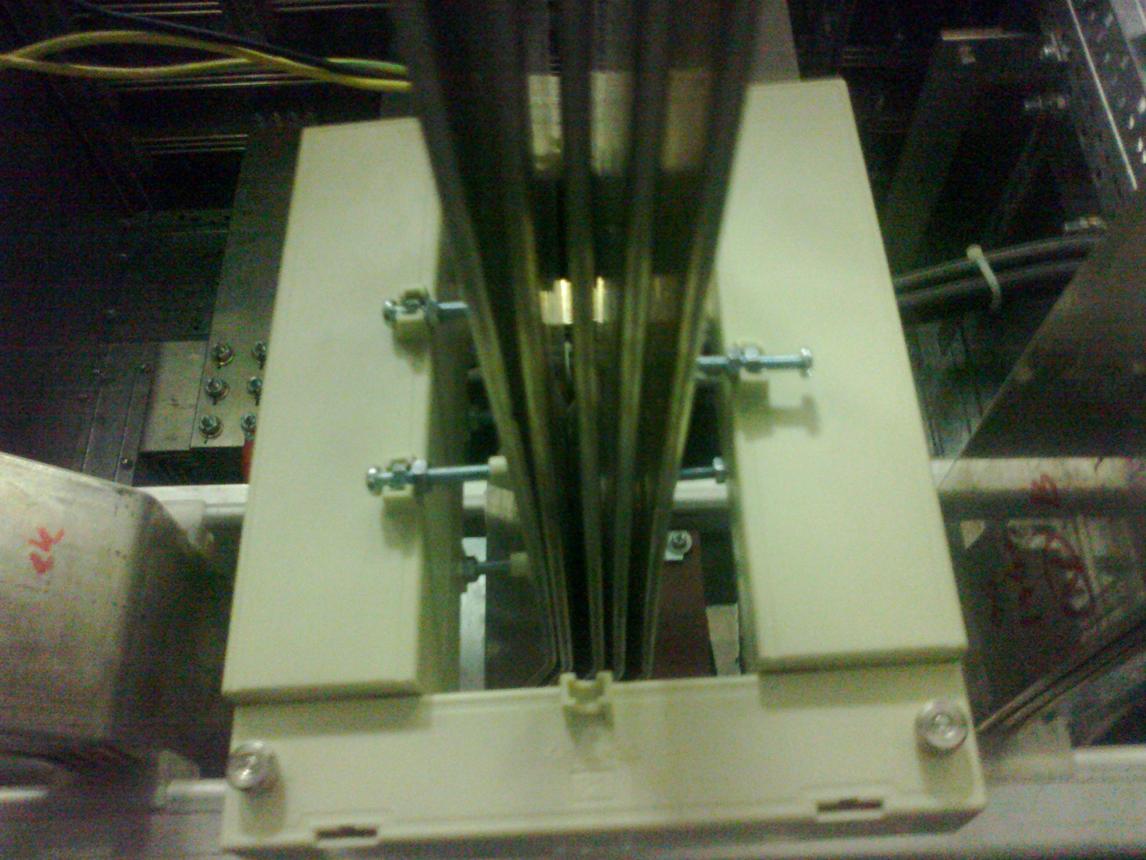
Figure 8
In summary, the use of open-type current transformers in renovation projects has the highest cost-effectiveness. It can quickly realize intelligent and low-cost multi-circuit monitoring of low-voltage power distribution, which is conducive to the further promotion and application of low-voltage intelligent power distribution.
--- END ---

COPYRIGHT © HEYI ELECTRICS SOLUTION


