News | | Feb 12,2026
I am looking for a way to match type transformers with residual current circuit breakers. I want split type current transformers to match circuit breakers perfectly. The KCT series provides the basis, for this analysis and the application scenarios.
In my work, with power distribution systems I see that residual current circuit breakers, also called RCDs or RCBOs are devices. The residual current circuit breakers protect people. Prevent fires. In engineering I notice that more and more systems combine split-core transformers with residual current protection. The split type current transformers work together with the circuit breakers to provide the residual current protection.
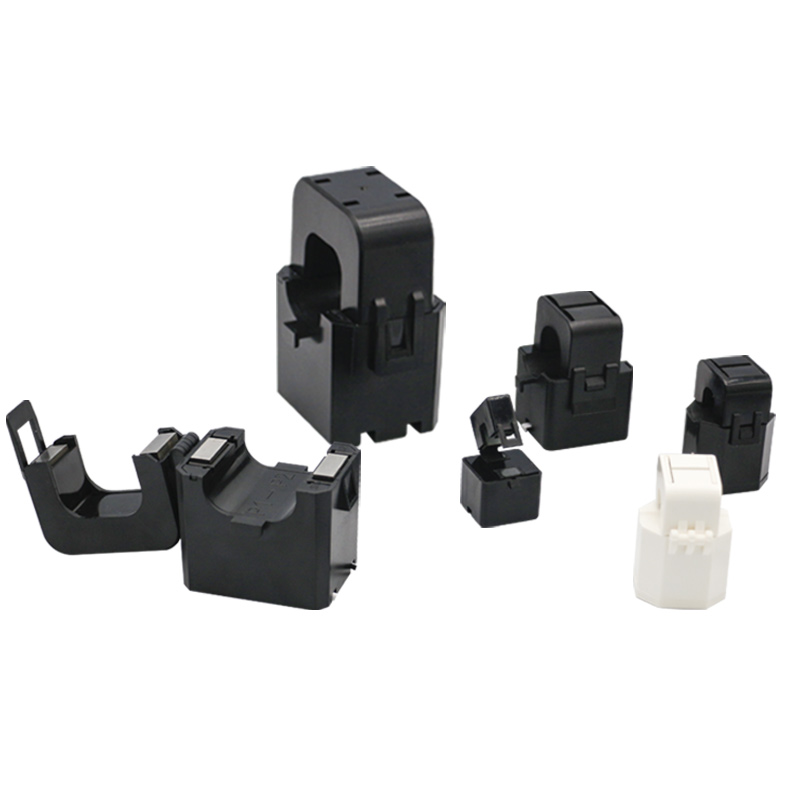
Why can split type current transformers be used with the current circuit breaker? What technical advantages does the type current transformer have?
I will look at the KCT series split-type transformer, from angles such as the principle of the KCT series split-type current transformer the structure of the KCT series split-type current transformer the signal matching of the KCT series split-type current transformer and the practical application scenarios of the KCT series split-type current transformer. I will base the review, on the features of the KCT series split-type transformer.
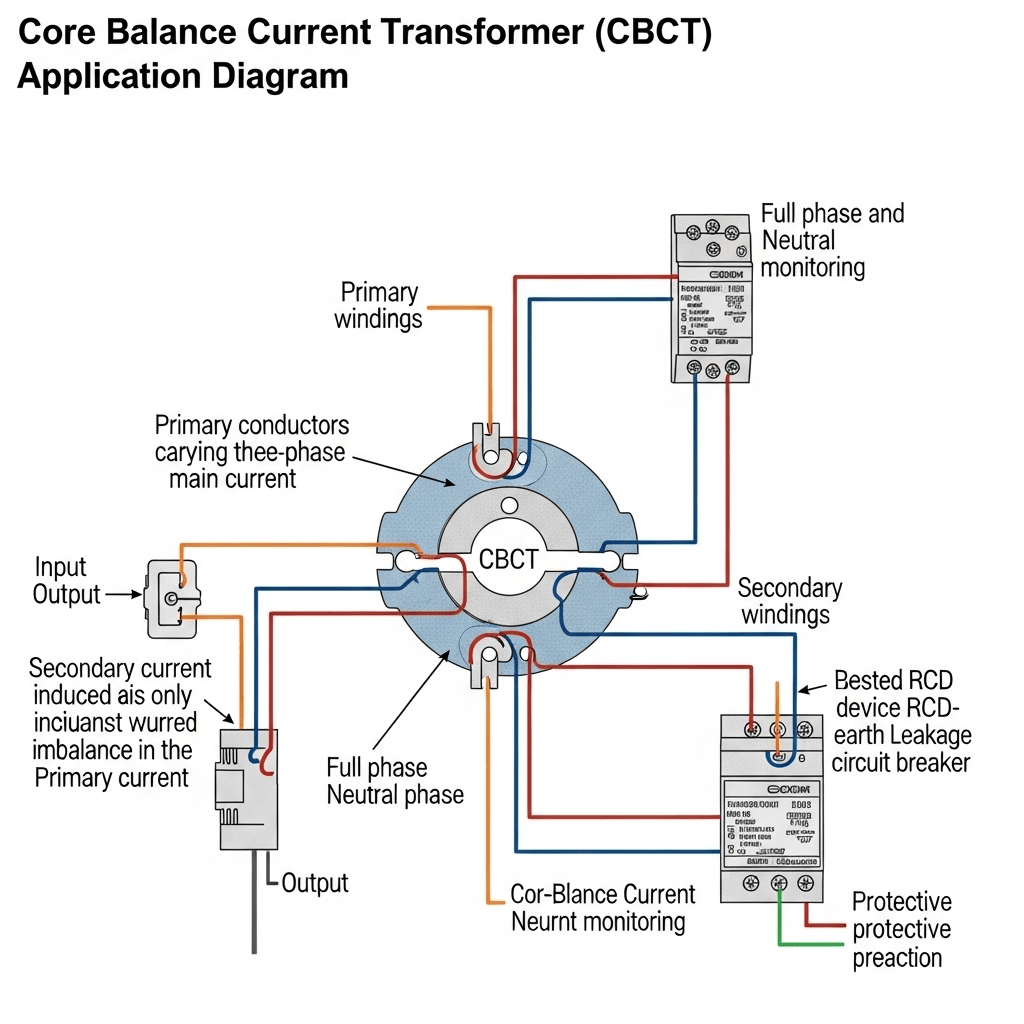
The core detection logic of a residual current circuit breaker is:
Verify that the current, in the wire and the current, in the wire are balanced.
Under normal circumstances:
Live wire current = Neutral wire current
vector sum = 0
When leakage occurs I notice that leakage can make the equipment casing become electrified. Leakage can also cause people to be electrocuted. Leakage can cause the insulation to get old.
Live wire current ≠ neutral wire current,
I see that the circuit generates ” current”. The circuit creates ” current”.
When the residual current goes above the set value for example 30mA, 100mA or 300mA the circuit breaker trips. I have seen the circuit breaker do this soon as the residual current crosses the set value.
I think the current transformer is the part, for the detection function. The current transformer makes detection possible.
The KCT series split-type current transformer has a structure and parameters that work well with leakage protection devices. The KCT series split-type current transformer is a match, for leakage protection devices.
I looked at the product information. The KCT series has the following features:
I think these characteristics match the core requirements of leakage detection systems. That is why the characteristics are useful.
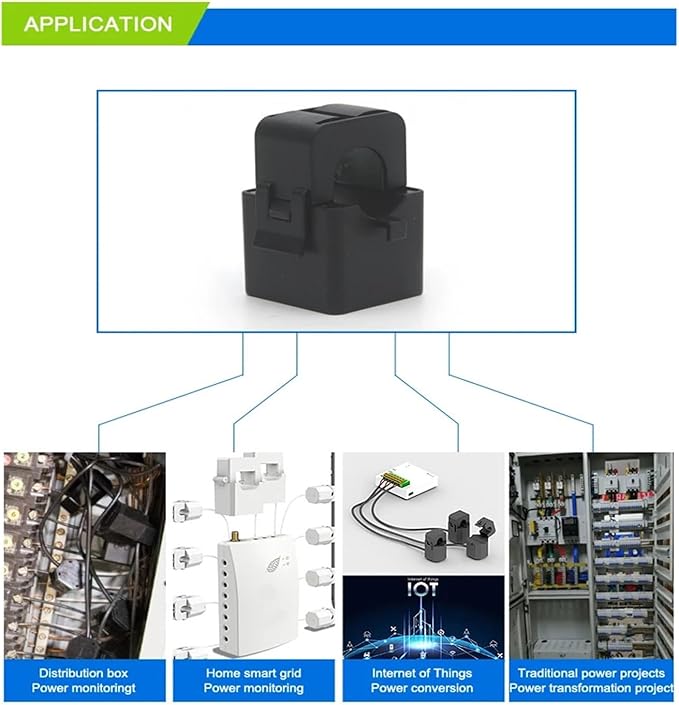
1️⃣ The through-hole structure is suitable for residual current detection.
The key to leakage current detection is:
I notice that when the leakage happens residual magnetic flux appears. I also see that the leakage creates flux.
CT outputs corresponding detection signals
The advantages of a split structure are:
✔ No wire disconnection required
✔ No power outage required
✔ Suitable for renovation projects
✔ Suitable for large busbar systems
This is especially important in industrial settings.
2️⃣ Lower voltage output is safer
I find the KCT series includes a built‑in precision resistor. The precision resistor provides the output:
0.333V or mA level current signal
The low-voltage output offers advantages:
High security
The system directly connects to the electronic leakage protection relay.
There will be no high voltage hazard due to secondary opening of the circuit.
I compare the CTs to 5A or 1A output CTs. The CTs are more suitable, for electronic leakage protection systems.
3️⃣ The accuracy meets the requirements, for leakage operation. The accuracy is good enough, for leakage operation.
I think the typical operating current, for a device (RCD) is:
30mA (personal protection)
100mA / 300mA (fire protection)
I looked at the KCT series. The KCT series has the accuracy class of 0.5/1.0. The KCT series has the error of less, than plus or minus 1 percent. The KCT series meets the accuracy requirements of the electronic detection units.
I have seen that the device keeps output in the current range (10%In~120%In). The stable output is crucial, for detecting currents.
4️⃣ Frequency range suitable for modern loads
Product frequency range: 50Hz~2kHz
This means:
1️⃣ Industrial power distribution cabinet upgrade and renovation
I notice many of the factory buildings have distribution cabinets: The electrical distribution cabinets sit in the old factory buildings.
No native leakage protection
small space
The busbar is hard to take. I have to struggle with the busbar each time I need to service the busbar.
Advantages of using a split-body CT scanner:
✔ Direct mounting
✔ Uninterrupted power supply installation
✔ Rapid deployment
✔ Compatible with electronic leakage current relays
The cost of renovation goes down a lot. The cost of renovation lets the homeowner spend less on the project.
2️⃣ Photovoltaic system leakage monitoring
I see that photovoltaic inverter systems have these characteristics:
Split-type CT can:
I have found that the solution works well for transformer substations. I also see that the solution works well for grid-connected cabinets.
3️⃣ Charging Pile System
Requirements for charging stations for new energy vehicles:
30mA AC
6mA DC detection (Type B system)
The detection module can use the split-type CT. The control board can combine the split-type CT. The split-type CT and the control board produce leakage detection.
4️⃣ Commercial building power distribution system like:
Using a split-body CT scanner can:
Comparison items Traditional monocular CT Split-type CT
I think the installation method is direct card mounting. Remove the stitches.
Suitable for renovation Unsuitable Very suitable
Security I think opening a road has risks. I think low voltage output is safer.
cost higher Reduce construction costs
Application flexibility Restricted Highly flexible
Under the trend of modern power systems:
I see that split-type current transformers have these features:
✔ Flexibility
✔ Security
✔ Scalability
✔ Electronic system compatibility
So people use the technology more and more for:
The ability of type transformers to be used with residual current circuit breakers is not just a matter of being able to use split-type current transformers and residual current circuit breakers. It is based on the compatibility listed below:
I check the accuracy. The accuracy meets the testing requirements.
In the power distribution the new energy systems, the commercial buildings and the electrical renovation projects all use split-type CT + leakage current protection systems. From my experience split-type CT + leakage current protection systems work well keep things safe and cost less.
When I design or upgrade a leakage protection system I often choose the type current transformer. The type current transformer fits the job well.
Compay:HEYI Electrical Co., Ltd.
Brand: HEYI/ASCT
Contact: Bethy
E-mail: heyi@heyiele.com
Tel: 86-13968747975
--- END ---
Prev: Why single‑phase window type current transformer Dominate South America’s Power Grid
Already the latest article

Feb 12, 2026
I am looking for a way to match type transformers with residual current circuit breakers. I want split type current transformers to match circuit breakers perfectly. The KCT series provides the basis, for this analysis and the application scenarios. In my work, with power distribution systems I see that residual current circuit breakers, also called… Continue reading Why split type current transformers Work with RCDs

Feb 04, 2026
Why is single‑phase window type current transformer so popular in the South American electricity market? —Technical Analysis Based on the South American Power Bureau’s Bidding and Outdoor Environment In countries, like Brazil, Chile, Peru and Colombia the power infrastructure construction has kept growing in recent years. The distribution network upgrades, the energy grid integration and the… Continue reading Why single‑phase window type current transformer Dominate South America’s Power Grid

Feb 03, 2026
Why have single phase satuation current transformers (CTs) become an essential core component of switchgear in Southeast Asia? — Detailed technical analysis using the ICT series encapsulated transformer as an example. We examine the ICT series encapsulated transformer. In Asian countries such, as Malaysia, Indonesia, Thailand and Vietnam the low-voltage switchgear appears a lot in… Continue reading Why Single-Phase Saturation Isolation Current Transformers Are Essential in Switchgear

COPYRIGHT © HEYI ELECTRICS SOLUTION

